
Like a River

Tags

, , , , ,

“I’ll wait for you no more like a daughter
That part of our life together is over
But I will wait for you forever
Like a river…”     –  Carly Simon, “Like A River”


Like a river of life, Carly Simon’s music courses through my veins.

It has been this way since the earliest days of high school.  Carly shares her life so freely in song that it has always brought me comfort — she feels no need to cover-up the love or joy or pain.   I believe she grew stronger for the sharing of all her ups and downs;  and if not, I can say for sure that her openness made me stronger.

Carly’s songs invite me to lean into her experience, which prepared me to ride across similar rough waters of my own life.  So it is with Like A River, a song Carly penned in the mid-nineties about the fresh passing of her mother.  I listened to this song, along with all the other recordings released on Letters Never Sent, as I commuted to and from Houston in the late 1990’s.  Even now, I can see myself turning off of State Highway 288 on to south US Highway 59, listening to Like A River with tears in my eyes, as I got use to the idea of losing Mom long before I stood on the precipice.

Listening to Carly’s loss evolved into a longing to listen to others facing similar losses.  Though there are informal ways to offer the gift of a listening ear, I chose a more formal path, one that prepared me to become a Stephen Minister.  I sought training because I grew weary of feeling inept and uncomfortable around those grieving the loss of a loved one.  I wished to comfort however I could.  While I had no intention of becoming commissioned in the beginning, it  felt right to do so in the end.

Over the course of thirty months, I provided care to two different women.  Odd enough, both were facing the loss of their mother.   I cried with them and I prayed for them and with them.  But most of all, I just sat and listened and invited them to express their grief and their fears and ultimately their love, the love that would flow into eternity with their mother.

Long after the formal grieving period was over and all the family had returned home to pick up the doings of their own lives, I continued to visit them.  I came to listen to my care receivers, to offer them a safe and confidential space to express their grief in whatever way they wished.  And I didn’t stop coming until they felt their grief work was finished.

I gave up the ministry when I moved to Oklahoma.  But the Stephen Ministry led me to to explore spiritual direction which led me to create a contemplative prayer class, which has led me to pray for Connie, another daughter preparing to say good-bye to her mother.

Like a river, the stories of a mother’s passing are part of life itself — and like all life, the stories deserved to be shared.

Morning Office

Tags

, , , ,

I am officially christening my “Daily Office” as my “Morning Office.”

I no longer dream of spending time with all the biblical readings prescribed by the Book of Common Prayer, though last fall, I had thought by now I would have worked up to three-square meals of biblical reading a day.   But no.  As I have settled into this new spiritual prayer practice, I find my morning readings create enough work to fill my daily life.

Each morning begins with the prescribed Psalms for the day.  I do not like reading the Psalms, as reading a Psalm is like taking some bad-tasting medicine that I pray will somehow do me some good.  It’s a half-hearted reading at best, though it does make me grateful for the Gospel and New Testament readings that follow as second and third course.

My problem with the Psalms is that they remind me of those days when I use to supervise a group of employees.  I always found it hard to manage people, mostly because no one ever dropped in to tell me that work and life was grand.  Instead, my employees would come to lament over the state of our office or whine about what was wrong with whoever or whatever.   And of course, they wanted me to fix it.

The psalmists want God to fix things too.  They hold nothing back for the sake of propriety.  There is no middle way; depending on the number, they burn hot with love or hate — life or death —  or wonder or misery.  I am left to wonder whether these people are too good to be true — or just too true.  Sometimes I just want to close the book on them and say, “Too much information — keep it to yourself, will you?”

When life in the Psalms is bad, prayers sound an awful lot like whining to my ears.  But somehow, I can’t think anything but that God just embraces it all, whatever it is we have to say.  The Psalms show people at their best and people at their worst and as long as people are being true to their experience, I can’t imagine God seeing anything wrong with it.

Created in the image of God who calls himself “I Am Who I AM”, as long as “we are who we are”, then everything is right between God and us — even when everything else is going to pot calling the kettle black.

Surprised Eyes

Tags

, , , , ,

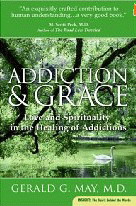
“Miracles are nothing other than God’s ordinary truth seen with surprised eyes.” — Gerald May, Addiction and Grace

I read a few ‘teaching’ books related to my coursework in spiritual direction.  Once I’ve finished with a book, I try to sum up the gifts received.  But Addiction and Grace did not really lend itself to this particular exercise.  Instead I was left with a few questions, like, what has this book made of me?  Am I an addict?

It’s not easy to think of  myself as “addict”, though I do acknowledge that I once suffered from a work addiction, a very long time ago.  Over lunch yesterday — when I was telling my family about what I was learning in this book — my husband surprised me by saying that I still have a work addiction — that the only thing that has changed is the work itself.  I’m still trying to make sense of his words, wondering if I’m blind to the truth that my husband so apparently sees.

What I do know is that I didn’t share my thoughts about the book at this evening’s group discussion;  instead, I listened or sometimes nodded my head when someone said something that felt true to my experience.  Had I shared, I would likely have confessed that the book has left me sad and edgy — that it made me recall — more than one —  that favorite T.S. Eliot quote of mine:   “humankind cannot bear very much reality.”

I have returned to all those underlined words that ‘hit home’ as I read them.  Quotes that assert that we all suffer from addiction and that we are never totally free of our addictions.  May asserts that if we become free of one — and by free, May talks about the addiction as if it is in remission rather than cured — another swings into the open parking spot to take its place.  Addiction is defined broadly:

“The same processes that are responsible for addiction to alcohol and narcotics are also responsible for addiction to ideas, work, relationships, power, moods, fantasies, and an endless variety of other things.”

Of course, as I’m reading these words, and many more like them, part of my mind is engaged in coming up with a list of my own ‘addictions’.   That chocolate pudding I was craving last week, perhaps?  The books that I must buy and not check-out from the library?  God forbid — this  blog?

It’s ironic that my reasons for purchasing and reading this book have turned out to be only ancillary after it’s all said and read.   It was not to primarily help others that I read this book, though I believe the lessons learned will allow me to do so, in a very indirect supportive way.  Rather, this book invites me to name my own addictions so that, with God’s help, I can become “free” of their power  in my life.  And who but God knows what miracles of ordinary truth this may mean to my surprised eyes.